
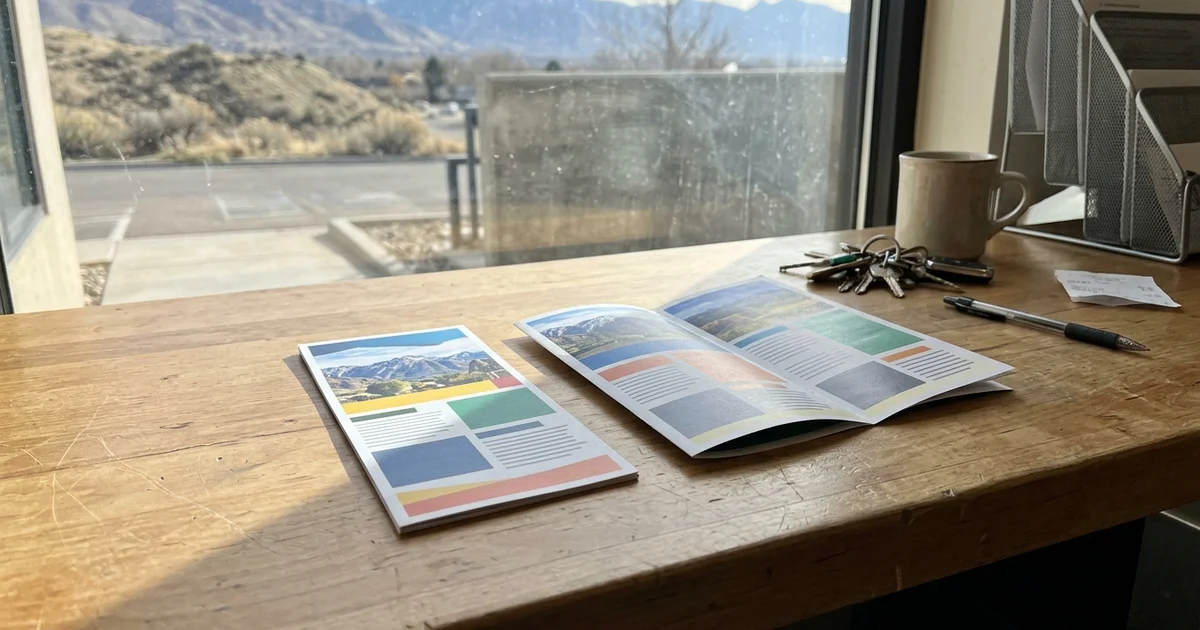
We know exactly how frustrating it is to spend your marketing budget on a print campaign that falls flat. Local marketing often feels like throwing spaghetti at a wall to see what sticks.
The choice between flyers vs rack cards vs brochures dictates whether your message gets read or tossed in the recycling bin.
Our team has printed thousands of these Flyers, cards, and folded pieces for businesses across the country. Let’s look at the 2026 data to see how consumers actually interact with physical media.
This guide will walk you through the exact specifications and best use cases for each format.
Quick definitions
Every print format serves a specific function. Picking the right one saves money and gets your message read. We outline the basic differences below so you can choose the right tool for the job.
- Flyer. A single flat sheet is typically printed on standard US Letter size paper measuring 8.5 by 11 inches. This fast and flexible format works best for one specific message. Our print shop often produces these for limited-time promotions or event announcements.
- Rack card. A tall card is specifically cut to 4 by 9 inches so it stands perfectly inside standard lobby display racks. You will see these placed at front desks and visitor counters. We recommend this size when you need to provide a short overview and a strong call to action.
- Brochure. A folded piece typically starts as an 8.5 by 11 inch sheet that gets creased into a tri-fold or bi-fold shape. This format offers several panels to hold detailed information. Our designers utilize brochures to showcase full service menus or explain complex business processes.
Side-by-side comparison
Comparing flyers vs rack cards vs brochures side by side makes the decision process much clearer. You need to weigh the physical dimensions against your specific marketing goals. We created this quick reference matrix to highlight the core differences.
| Feature | Flyer | Rack card | Brochure |
|---|---|---|---|
| Standard US Size | 8.5 x 11 inches | 4 x 9 inches | 8.5 x 11 inches (flat) |
| How much it says | One focused message | A short overview | Several services or a process |
| Standard Material | 80lb text paper | 14pt to 16pt cardstock | 100lb gloss text |
| Where it is used | Handouts, counters, events | Display racks, lobbies | Waiting rooms, leave-behinds |
| Shelf life | Short, date-specific | Medium duration | Long, kept for reference |
| Best for | Fast promotions | Pickups by foot traffic | Explaining exactly what you do |
When to choose a flyer
A single flat sheet is the undisputed champion of fast, affordable local marketing. You can quickly print a stack of 5.5 by 8.5 inch half-sheets to blanket a neighborhood. Our clients frequently use this format for weekend sales and local event booths.
- You are running a promotion with a strict deadline.
- You are announcing a single event or a new service launch.
- You want something quick and inexpensive to hand out at a counter.
Printing costs remain very low for this format. You can stretch your budget further while reaching a wide local audience. We suggest using a high contrast design to ensure your headline grabs attention immediately.
When to choose a rack card
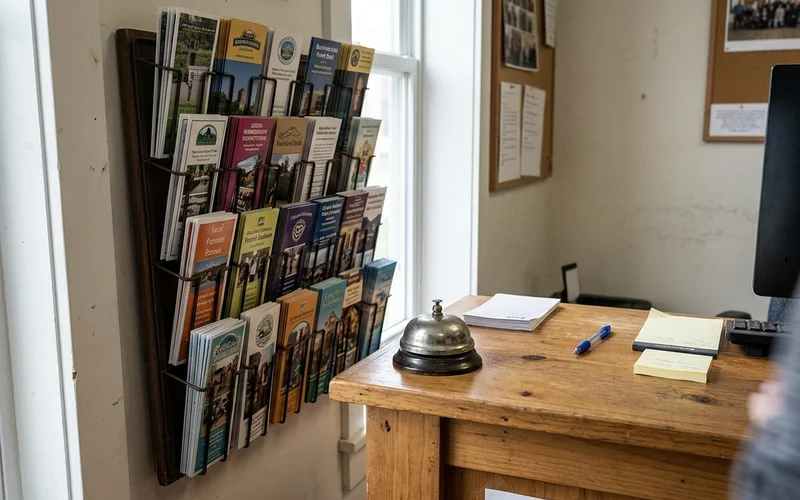
A rack card vs flyer comparison usually comes down to the physical environment. Hotels, tourism boards, and local visitor centers rely heavily on standard 4 by 9 inch cards because they fit perfectly into specialized acrylic stands. Our printing experts always print these on thick 14pt or 16pt coated cardstock.
That heavy paper weight ensures the card survives weeks of handling in a busy lobby. You need a sturdy material so the paper does not slump or bend while on display. We see the best results when businesses use the top three inches of the card to display a massive, eye-catching hook.
- Your piece will sit in a display rack at your front desk or a partner’s lobby.
- You need a short overview and one crystal clear call to action.
- You want something sturdier than standard paper that still fits inside a pocket.
Rack cards are part of our printing services and priced by quote.
When to choose a brochure
A folded piece gives you the space to tell a complete story. A 2026 report from the United States Postal Service shows that 84 percent of consumers read direct mail the same day it arrives. Our data confirms that a high-quality folded piece instantly builds credibility with those readers.
You can use the distinct panels to guide a homeowner or customer through a logical journey. The front cover hooks them, the inside panels explain the details, and the back cover closes the sale. We frequently design these pieces to serve as permanent reference materials.
- You offer several distinct services and want customers to see them all.
- You need to explain a complex process, like a medical treatment plan or a contracting estimate.
- You want a professional leave-behind that customers keep in a drawer for future reference.
A brochure vs flyer decision is simple when you have a lot of ground to cover. You just cannot fit a full service menu on a single flat page without making the text unreadable. See brochures for specific format options and fold types.
Common mistakes
Print marketing fails when you try to force a format to do a job it was never meant to do. You will waste money and frustrate your readers. Our production floor catches these three major errors every single week.
- Putting a brochure’s worth of text on a flyer. Shrinking your text below 12pt just to fit more words ruins readability. If your layout looks crowded, you must cut the copy or upgrade to a folded piece.
- Using standard paper in a rack. A thin sheet of 20lb copy paper will immediately flop over and disappear behind the other cards. You must use thick cardstock for display stands.
- Printing an expensive tri-fold for a one-week sale. A single sheet is faster and much cheaper for short-lived offers.
Add a dynamic QR code to any of them
A QR code linked to a booking page makes any handout easy to track. Using a dynamic QR code allows you to update the destination link later without reprinting the physical paper.
Design tips for each format
Maximizing Flyer Impact
You have roughly two seconds to capture a reader’s attention with a flat sheet. Lead with your main offer using a massive, bold font. Our designers stick to a single font family to avoid visual clutter.
You should include one clear message, one strong call to action, and one scannable code. Put the expiration date exactly where people can see it.
Designing for Display Racks
The top third of the card is the only part that shows in a standard acrylic rack. You must put your company name and your primary hook in that specific real estate. Our most successful clients use the lower two thirds for a few punchy benefit statements.
You want to give the reader just enough information to make them pick up the card.
Structuring Folded Brochures
You must treat every panel as a distinct page with its own purpose. The cover invites the reader inside, while the interior panels detail your exact services. Our layout specialists always leave plenty of white space so the dense information does not feel overwhelming.
You should reserve the back panel strictly for contact information, location details, and business hours.
Where each format gets seen
Location dictates your design choices. You need to match the physical item to the environment where the customer will actually receive it. We compiled this location matrix based on standard US business practices.
| Place | Best format | Why it works |
|---|---|---|
| Community event booth | Flyer | Cheap enough to hand out to hundreds of passing attendees. |
| Front desk display rack | Rack card | Fits the standard 4 by 9 inch acrylic holders perfectly. |
| Lobby of a partner business | Rack card | Stands upright and commands attention on a crowded counter. |
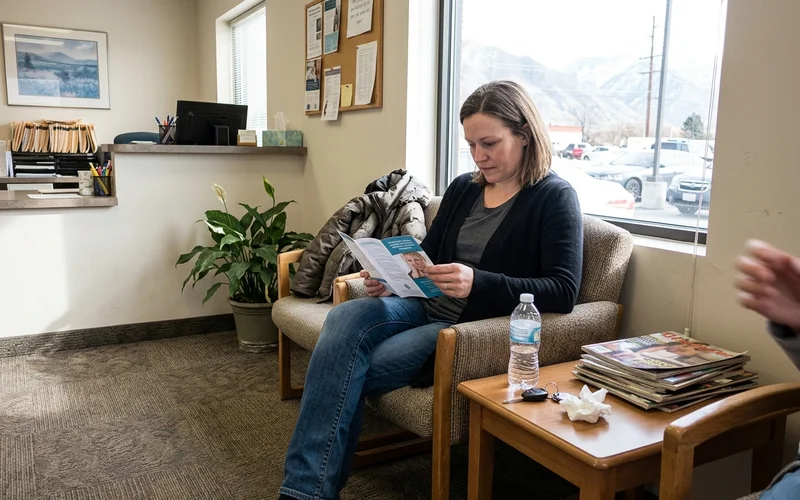
| Waiting room | Brochure | Gives a captive audience something substantial to read. |
| In-home estimate | Brochure | Serves as a high-value leave-behind item for homeowners to review. |
| Handout with a receipt | Flyer or rack card | Slips easily into a shopping bag or a customer’s pocket. |
Using QR codes well
Recent 2026 data from Wave Connect shows that over 100 million Americans will scan a QR code this year. You can capture that traffic by linking your printed materials directly to a specific digital action. Our marketing team always links codes to a dedicated landing page or a direct booking calendar.
You should completely avoid sending people to a generic homepage where they have to hunt for information. Give the printed square at least a quarter inch of clear white space around the edges so smartphone cameras can focus. We highly recommend testing the code on both Apple and Android devices before you finalize the print run.
Keep your brand consistent
Consistency across your marketing materials directly influences consumer trust. A customer who grabs a card from a coffee shop and later sees your yard sign should recognize your company instantly. We help businesses match their exact Pantone colors across every single physical touchpoint.
Whatever format you choose to print, you must lock in your visual identity. Keep your logo placement, primary colors, and typography identical to your website and business cards. Our color matching systems ensure your brand looks professional and reliable every time you print.
Ordering and quantities
Volume directly impacts your final price per piece. You will often print single sheets in smaller batches of 250 for a very specific, short-term promotion. Our commercial presses require slightly higher minimums for folded pieces, but those items stay relevant for months or years.
Rack cards and folded pieces act as long-term marketing assets. You might order a batch of 1,000 or 2,500 to secure a much lower per-unit cost. Tell us exactly how you plan to distribute them, and we will help you calculate a sensible quantity.
Still not sure?
Choosing between flyers vs rack cards vs brochures does not have to be a guessing game. Tell us where the piece will be distributed and what specific message it needs to deliver.
We will tell you honestly which format provides the best return on investment.
All three formats are priced by custom quote, and professional design help is always available.
Contact us or call (385) 360-1966 to get started.