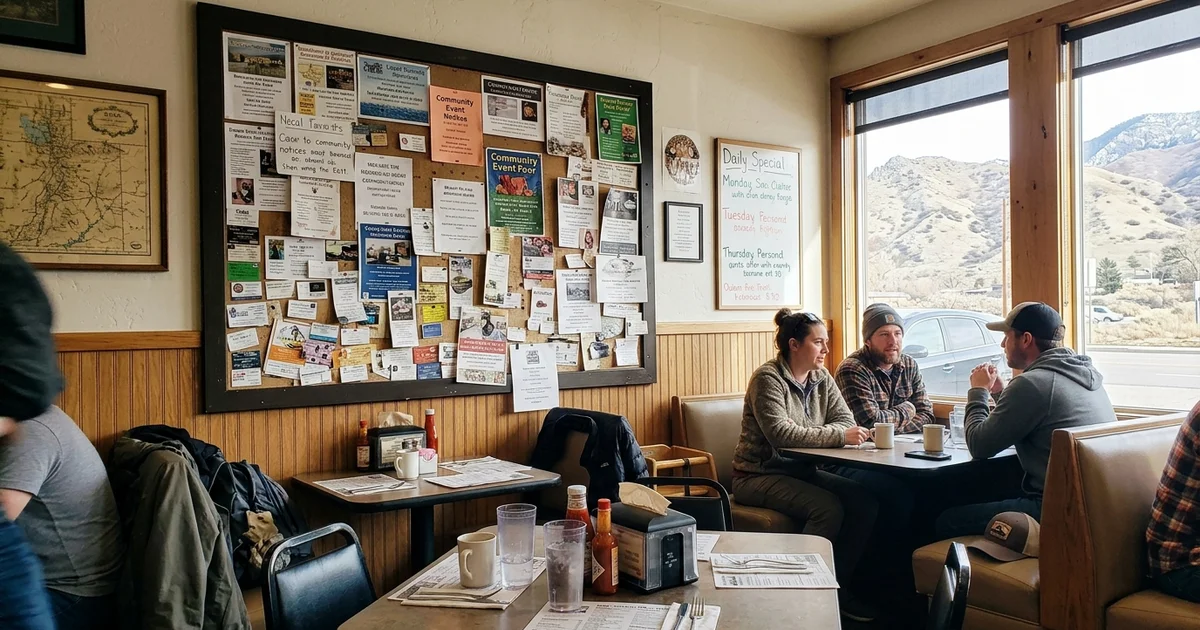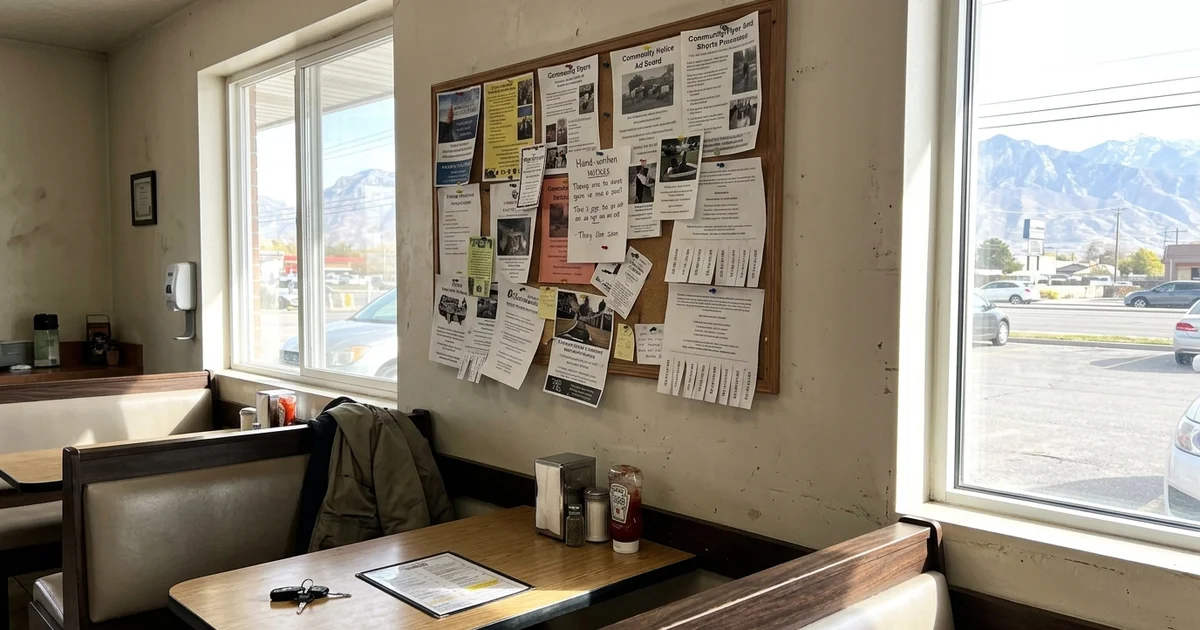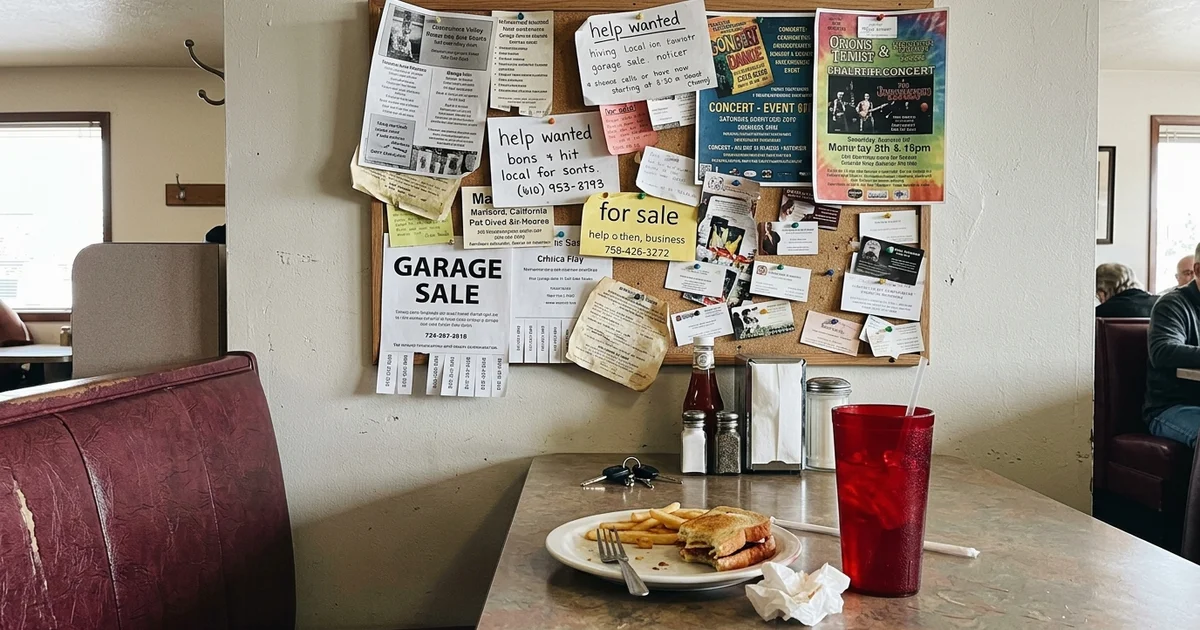
The best fit, in one sentence
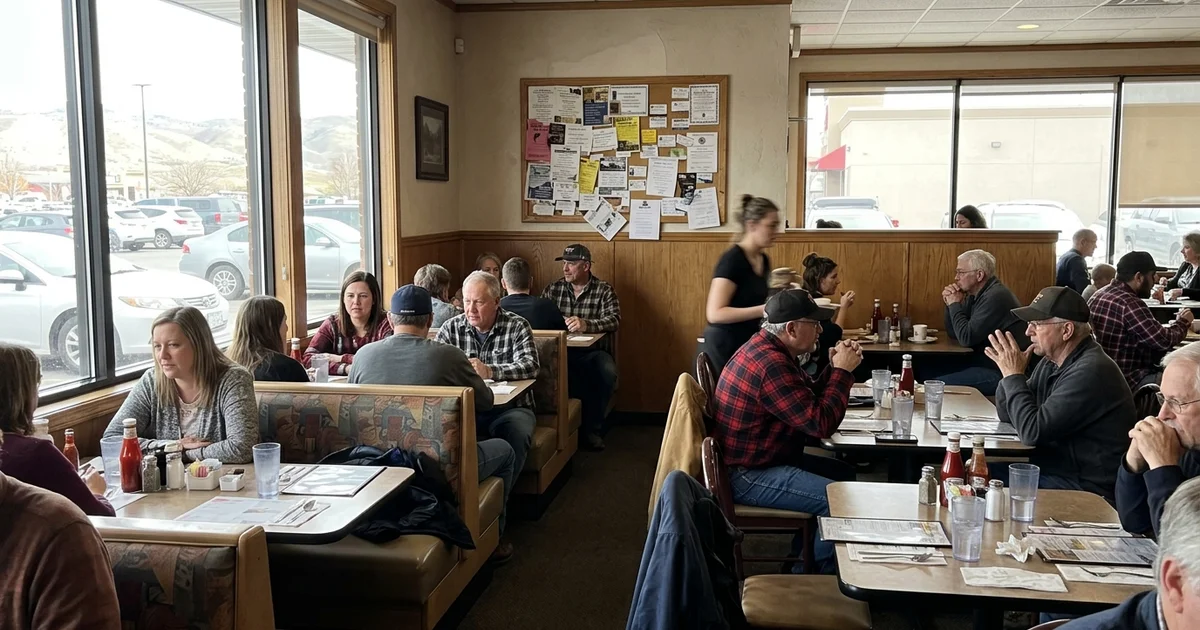
We often see local owners struggle to maintain visibility in their exact zip codes. A scattered digital campaign misses the immediate neighborhood, which is exactly where most of your reliable customers actually live. That missing local link is why Community Boards work best for businesses needing consistent, year-round exposure to a highly specific US area.
We find that reaching a whole city at once is rarely as effective as reaching the same nearby neighbors repeatedly. A 2025 report from the Out of Home Advertising Association of America (OAAA) showed that out-of-home advertising reached a record $9.46 billion in the US, driven largely by local demand.
Let’s look at the data, what it actually tells us, and explore the best businesses for restaurant advertising boards.
Businesses that tend to fit well
We know that certain industries naturally thrive on hyper-local trust. Home service providers need homeowners to remember their name the moment a pipe bursts or a roof leaks.
Home services
Roofers, HVAC technicians, plumbers, electricians, landscapers, painters, remodelers, handymen, cleaners, pest control, and tree services fit perfectly here. Homeowners do not need you every week, but they will call the name they recognize when an emergency strikes. Our data shows that consistent visibility builds that crucial familiarity over time. Recent 2025 metrics from the OAAA reveal that out-of-home ad recall regularly exceeds 80%. That high recall is exactly what a local roofer needs before storm season hits.
Health and personal care
Dentists, chiropractors, medical spas, and salons rely heavily on long-term patient relationships. People choose these providers close to home and often stay with them for years. We look closely at retention metrics for these fields to understand their growth. The 2026 Catalyst Index by Henry Schein One reports that average US dental practices retain 70% of their patients. The top ten percent of practices reach a massive 94% retention rate. To put that in perspective, acquiring a new dental patient costs five times more than retaining an existing one.
Neighborhood services
Auto repair shops, gyms, child care centers, pet groomers, real estate agents, and insurance agents round out the best fits. Their customers often eat at the same local spots week after week. We see these businesses grow reliably when they stay visible in those daily routines.
Signs a board fits your business
We ask a few specific questions to determine your local board ad fit and see if a placement will actually drive revenue for your team. The answers help clarify if your marketing budget is going to the right place. Our team prefers to look at objective data rather than guessing.
| Question | Why it matters | The Data Behind It |
|---|---|---|
| Do your customers live in Taylorsville, West Jordan, or nearby? | That is where we are signing host locations. | Proximity matters most for local services. |
| Does recognition help you win work? | Boards build familiarity over months. | 81% of consumers require multiple touchpoints before acting. |
| Can you make a simple offer or point to a booking page? | The QR code needs somewhere useful to go. | Frictionless booking increases conversion rates. |
| Do customers come back to you over time? | Long-term relationships pay back a year-long spot. | Retaining customers is significantly cheaper than finding new ones. |
| Would a few new local customers cover $600 a year? | That is the cost of a yearly spot. | AdQuick 2025 data shows average US out-of-home CPM ranges from $3 to $8. |
You need to know your numbers before committing to any annual campaign. We always advise clients to calculate their lifetime customer value first. A single new roofing job or a dedicated family at a dental practice easily covers that $600 annual placement.
Repeat visits are the point
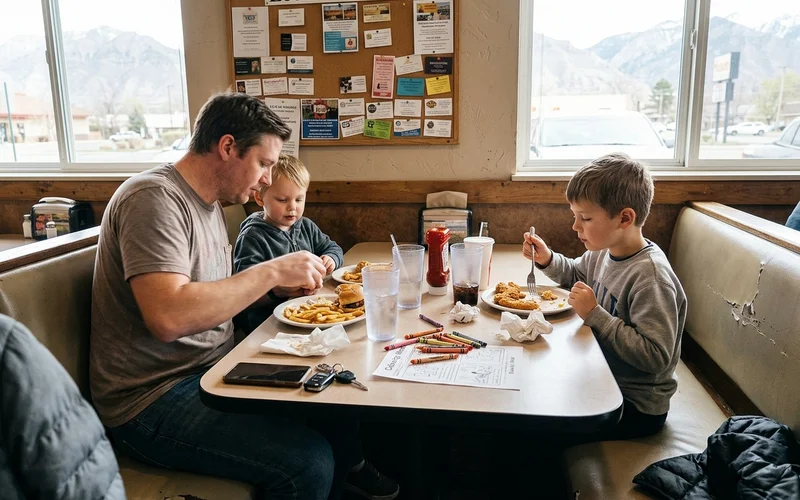
Restaurants naturally cultivate a loyal base of regular diners who return consistently. A family that eats at the same place twice a month sees your ad more than 20 times in a year. We know that this frequency is exactly what drives the old marketing “Rule of 7,” which states a buyer needs to see a message at least seven times before taking action.
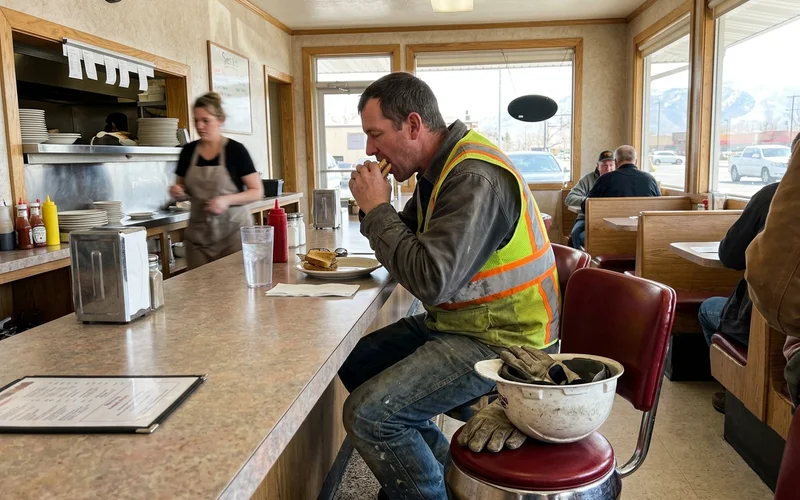
A tradesperson who grabs lunch at the same diner sees your brand even more often. Our favorite metric to track here is “dwell time,” which measures how long a customer sits in one place. The Bureau of Labor Statistics released its 2025 American Time Use Survey, showing the average person spends over 74 minutes a day eating and drinking.
A 2025 industry report from Waitwhile notes that average walk-in wait times at restaurants run between 15 and 25 minutes. We use this captive waiting period to your advantage. Your audience is sitting, relaxing, and looking around the room, which provides the perfect environment for a passive advertisement to register. That repetition is what builds recognition, and it is why board spots run a full 12 months.
One business per category
Each board holds one business per category, so your category stays yours on that board all year.
Businesses that may not fit
Not every industry benefits from a static, neighborhood-focused display. We want to be clear about when to look elsewhere.
- Businesses that only serve customers far from the board areas will waste their investment.
- Businesses that need a big burst of responses in a short window should prioritize digital channels. A postcard mailing or Google Ads may suit that better. We note that 2026 industry benchmarks from Focus Digital show the average US Google Ads cost per click at $5.42. You pay a premium for that speed, but it works well for emergencies.
- Businesses that sell mostly to other businesses rather than local residents generally require different strategies. A 2026 Boomerang AI report highlights that typical B2B sales cycles now stretch between 60 to 120 days. A restaurant board builds local consumer brand awareness, rather than engaging a corporate buying committee.
Pair a board with a postcard
Boards reach people while they are out in the community. The Community Postcard reaches them at home in Draper, Sandy, and Cottonwood Heights. We consistently recommend combining these formats for a true omnichannel approach.
Recent 2026 marketing data indicates that combining physical touchpoints, like direct mail with out-of-home ads, significantly boosts brand recall. The physical format of direct mail also drives higher engagement, with 2026 dental industry reports noting a 4.5x higher open rate compared to standard emails.
Our team sees many owners using both, relying on unique QR codes to track exactly what each piece brings in. This dual tracking removes the guesswork from local campaigns.
Matching your offer to a restaurant audience
People in a restaurant are relaxed, often with family or coworkers. A 2024 national survey by US Foods showed that 55% of US consumers specifically prefer dining out over takeout to enjoy the atmosphere and socialize. We want to capitalize on that relaxed mindset. Offers that fit that moment tend to work well:
- Home services: “Free estimate” or “$50 off your first service,” pointed to a simple booking page.
- Dentists and chiropractors: a new-patient special and an easy online booking link.
- Salons and med spas: a first-visit offer or a seasonal service.
- Gyms: a free class or trial week.
- Auto repair: a discount on a common service like an oil change or inspection.
- Agents: a free consultation or a home value check.
Whatever you choose, the QR code should take people straight to the offer, not to a busy homepage. Our advice is to make the next step completely frictionless.
How to judge a board after a few months
Because a board runs for 12 months, it is absolutely worth checking in partway through. We measure success by looking at a combination of direct actions and indirect brand lift. A complete evaluation requires three steps:
- Look at QR scans to see if people are engaging with the ad directly.
- Ask new customers where they heard about you, and note “the board” or “the restaurant.”
- Watch for name searches. People who see your name often look you up later.
Industry benchmarks from AdQuick in 2025 demonstrate that out-of-home advertising can generate a 40% lift in digital search engagement. We recommend watching your organic Google search volume closely during the campaign. Use what you learn to decide whether to renew and whether to add other placements.
When to add a second placement
If your board is working and you serve a wide area, a second board in a different part of town or a postcard spot can extend your reach. Market research confirms that in saturated US markets, a prospective customer may need between 10 and 26 exposures before making a buying decision. We view a second placement as the fastest way to accelerate that frequency.
Each board holds one business per category, so ask which categories are open on other boards. Our strategy team can map out overlapping territories for maximum effect.
Businesses that should wait
If you are fully booked for the next year, or you are about to change your phone number, name, or service area, it may be better to wait. A board runs a full year, so it is best to start when your details are settled and you are ready to handle an influx of new customers.
We often remind owners that pushing for new leads when you lack capacity is a costly mistake. Harvard Business Review data from 2014, heavily cited in current 2026 retention models, notes that acquiring a new customer can cost 5 to 25 times more than retaining an existing one. Our priority should be serving your current base perfectly before expanding.
Next step
Want to see if your category is open? We make the setup process incredibly straightforward. If you are still wondering who should advertise in restaurants, you can Contact us or call (385) 360-1966 directly.
Our team will confirm availability in your target neighborhood and talk through the best placement options. Getting started today secures your category for the entire year.