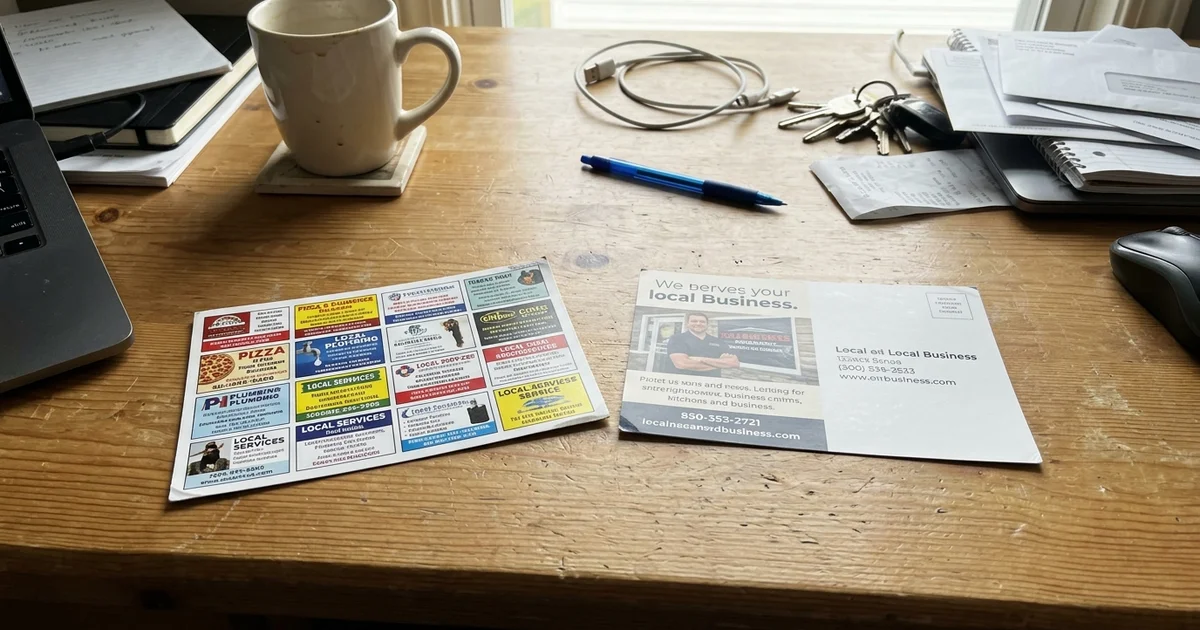
We know that feeling of sending out a marketing campaign and wondering if it actually paid off. You send out a mailing, cross your fingers, and hope the phone rings. The truth is, guessing doesn’t build a sustainable local business.
Our team believes you should never spend money on marketing without a clear way to see the results. Direct mail response rates reached an impressive 4.4% in 2026, which drastically outshines email’s 0.12%. Capturing that return requires turning a physical mailer into a measurable digital action.
We recommend starting with a simple approach, like attaching a specific element to every ad on the Community Postcard. Setting up QR codes or exclusive offers takes only minutes.
Let’s walk through exactly how to track postcard advertising for local businesses right now.
We won’t promise an arbitrary response rate to win your business.
Nobody can honestly tell you how many calls an ad will bring. Trackable campaigns simply give you the power to measure it yourself.
Why tracking matters
We have seen too many small businesses abandon profitable channels simply because they failed to measure the results. Direct mail leads actually generate 509% more revenue than digital leads, according to a recent PostcardMania analysis. This channel offers massive potential for local growth if you treat it like a digital campaign.
Our experience shows that answering “did my ad work” is much more valuable than asking if print advertising works generally. A single postcard in a specific neighborhood can drive high-ticket sales for months. Success comes down to building a system that proves exactly where those sales originated.
We want you to stop relying on gut feelings and start looking at hard data. Implementing a trackable offer code requires zero software or marketing degrees. Adding one simple habit to your workflow will completely change how you view marketing expenses.
Method 1: A QR code linked to a page you can measure
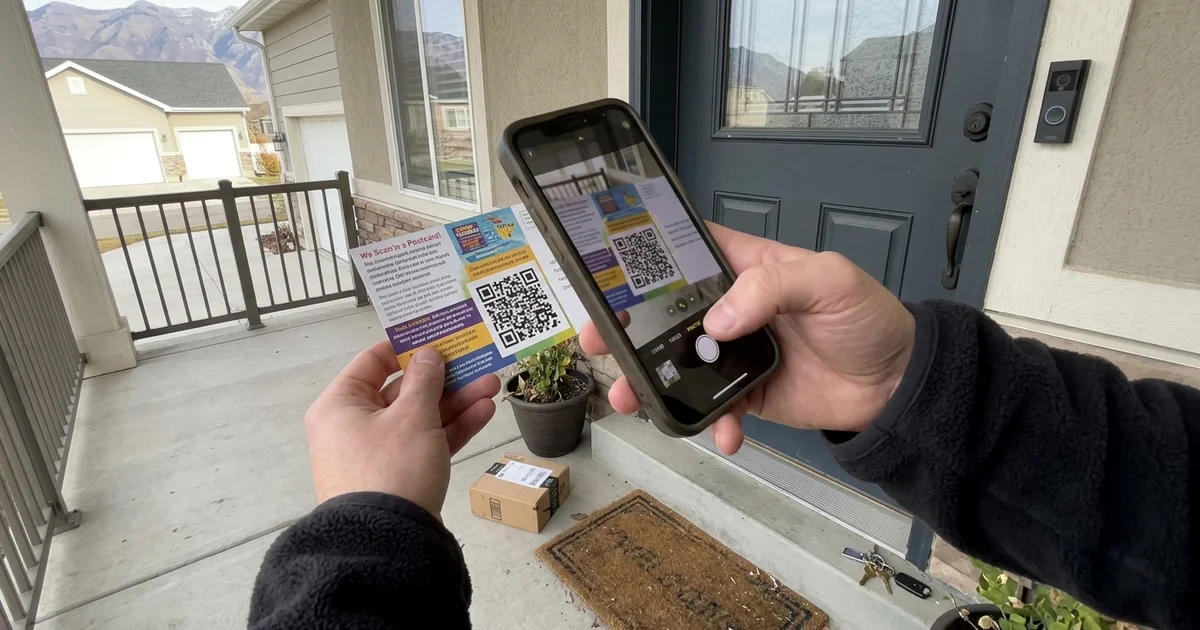
We always suggest using a QR code because it lets someone with a phone camera reach you in one step. Over 100 million smartphone users in the US are projected to scan QR codes in 2026, according to eMarketer data. The true secret to success is exactly where that code points.
Our most successful campaigns link the code to a URL that counts every single visitor. Instead of your homepage, direct people to a specialized destination. Here are the best ways to route your scans:
- A dedicated landing page built specifically for the offer
- A tagged link using UTM parameters (like
utm_medium=direct_mail) for Google Analytics 4 tracking - A booking page filtered to show appointments from the postcard
We can add the QR code quickly when we design your ad. You approve the exact placement on the proof. The team tests the scan thoroughly before anything prints.
Method 2: An offer that only appears on the card
Our favorite traditional tracking tool is still a unique offer that only exists on the mailer. This strategy remains incredibly powerful because it requires zero technical setup. If a “$40 off your first cleaning” deal only appears on the print ad, anyone who mentions it found you there.
We highly recommend tracking these specific deals directly inside your Point of Sale system. Platforms like Square and Toast let you create custom discount codes that cashiers can easily apply. Good tracking offers typically share these three characteristics:
- Specific: A dollar amount or a free add-on
- Exclusive: Kept off your website and omitted from other ads
- Easy to mention: A short code word like “MAILBOX”
We see higher redemption rates when the code word is memorable and simple to say at the counter.

Customers appreciate a straightforward discount process. Your staff will appreciate not having to guess where the lead came from.
Method 3: Ask every caller
Our team considers asking “How did you hear about us?” to be the most critical five seconds of any phone call. This simple question catches the people who skip the QR code entirely. It also helps identify callers who forget to mention the trackable offer code.
We encourage you to make this question a mandatory part of every new-customer intake script. Modern Customer Relationship Management software makes logging this information incredibly easy. Tools like Jobber and Housecall Pro allow you to add a custom dropdown menu for lead sources.
Our advice is to write the answer down immediately while the customer is on the line. Memory fades quickly when you are busy running a service business. Accurate data collection relies on recording the source at the exact moment of contact.
Put it together in a simple log
We understand that not every business owner wants to manage complex software dashboards. You do not absolutely need a spreadsheet, though using Google Sheets certainly helps organize the data. A basic notebook works perfectly well if you stay consistent with your entries.
Our recommended tracking strategy requires logging a few specific metrics for each edition. Set up a table like this to keep your numbers organized:
| What to log | Why |
|---|---|
| QR code scans or visits to the tagged link | Shows interest, even from people who don’t call |
| Calls or texts that mention the offer | Direct responses to the card |
| “Heard about you from the postcard” answers | Catches people who didn’t use the code |
| Jobs booked and their value | Tells you what the card was actually worth |
The final column is the most important piece of the puzzle.
We always remind clients that some people keep the card on the fridge for weeks before acting.

Tracking must continue well after the initial mail date to capture these delayed responses. Do not stop logging just because the first few days have passed.
Don’t lose the leads you paid for
Our research highlights that the fastest way to waste a postcard is to miss the calls it brings. Recent benchmark data from CallRail shows that 28% of calls to small businesses go unanswered. To make matters worse, up to 85% of those callers never call back and simply choose a competitor.
We know that missed calls cost the average local service business around $126,000 in lost revenue annually. If you are on a roof or under a sink, the phone inevitably goes straight to voicemail. Implementing a Missed-call text-back service completely changes this dynamic.
We use this feature to send an automatic text to anyone we miss. The automated message acknowledges their call immediately. This keeps the conversation active until you can safely reply and book the job.
A simple tracking setup, start to finish
Our favorite part of this system is that most owners can run it without any special software. A structured approach keeps the process from feeling overwhelming. Here is the exact checklist you should follow.
We built this specific setup so you can implement it immediately for your next campaign.
- Pick one offer: Select a specific deal that only appears on the card.
- Point the QR code: Route the destination to a page or link you can count, like a GA4 landing page.
Our team considers asking how they heard about the business a required step. 4. Start a log: Record the date, the lead source, and the final job value. 5. Review after a few weeks: Check the numbers later, since people keep the card on their fridge.
We promise that executing these five steps takes very little time. That is literally the entire process. No expensive dashboards or complicated analytics required.
Reading your results honestly
Our clients sometimes panic when their initial logs do not reflect massive volume on day one. When you look at your results, you must keep a few realistic expectations in mind. Direct mail often creates a halo effect that boosts other channels.
We always point out that some responses won’t be tagged. People forget the code entirely or call after searching your name online. That is exactly why asking everyone how they found you matters so much.
Understanding the Halo Effect
Our data proves that the card can work indirectly. A homeowner might see the card, keep your business name in mind, and find you on Google weeks later. Your Google Business Profile and website help capture that delayed traffic.
We remind everyone that one edition is a small sample. If you can, compare a few mailings before you firmly decide what the card is worth to you. Keep in mind that value beats volume.
Our most successful users track what jobs were worth rather than just how many calls came in. One large commercial job can matter far more than several small residential ones. Quality leads always outperform sheer quantity.
Using tracking to improve your next ad
We use tracking data not just to judge the card, but to actively tell us what to change. This concept is basically A/B testing applied to physical mail. If QR scans are high but actual calls are low, your landing page likely needs a clearer next step.
Our team knows that if calls mention the offer but do not book, the offer itself might attract the wrong customers. You should try a different promotional deal on the next run and compare the results. If you reserve the 3-run pack, you can easily test a different offer on each mailing.
We highly encourage keeping the specific promotion that generates the highest revenue. Testing different variables is how good marketing becomes great. Let the data dictate your future design choices.
Compare editions over time
Our long-term goal is to help you build a reliable lead generation engine. Once you have logged a mailing or two, you will have a real picture of what the card does for your business. Running the same spot in three mailings with the 3-run pack reveals whether repeat exposure changes your numbers.
We base this strategy on the marketing “Rule of 7,” which states consumers need multiple touchpoints before buying. Consistent presence in the neighborhood builds undeniable trust. Read one edition or a 3-run pack for more detailed information on that strategy.
Our team is always ready to help you set up reliable postcard qr code tracking. Contact us today to get started. You can also call (385) 360-1966 to speak with someone directly.