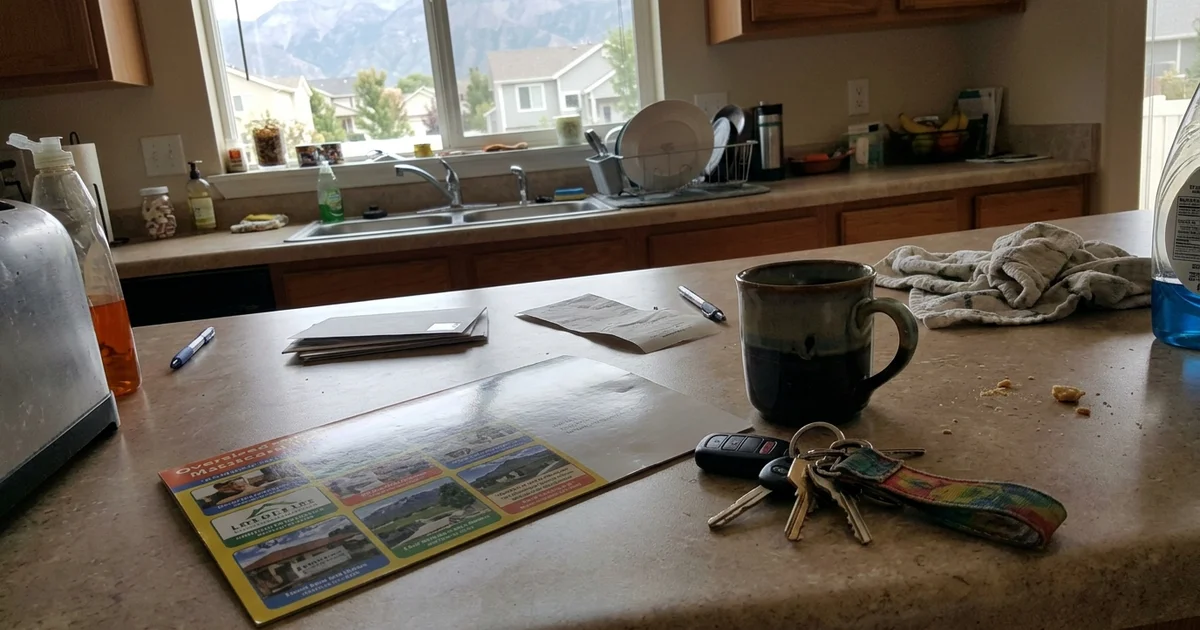
A co-op mailer, in plain terms
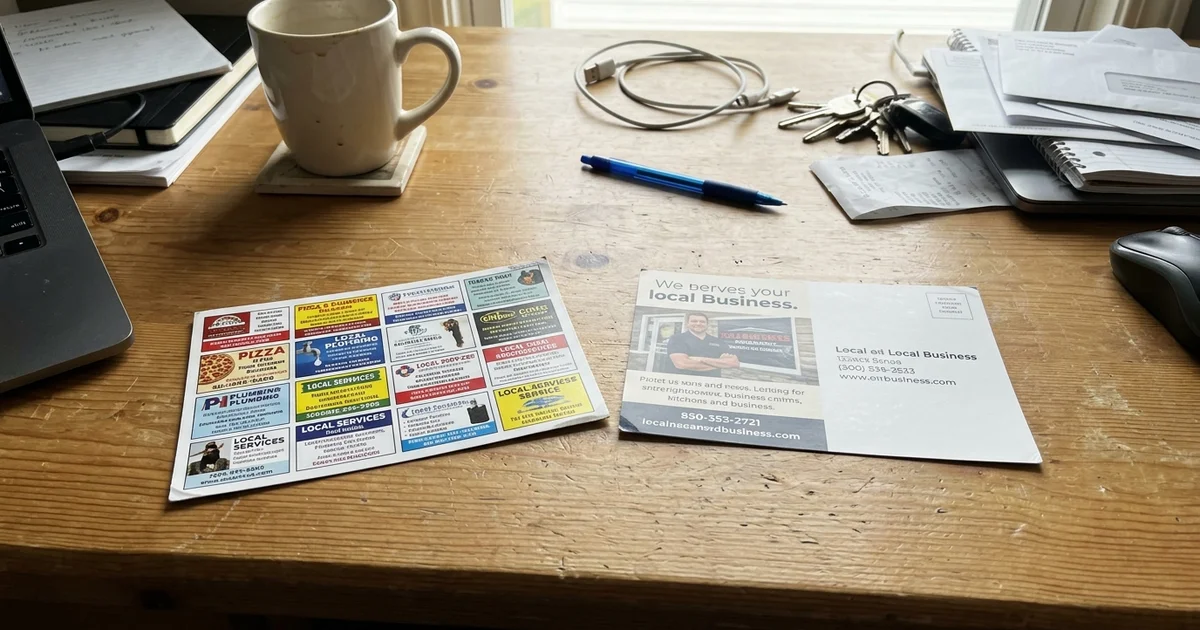
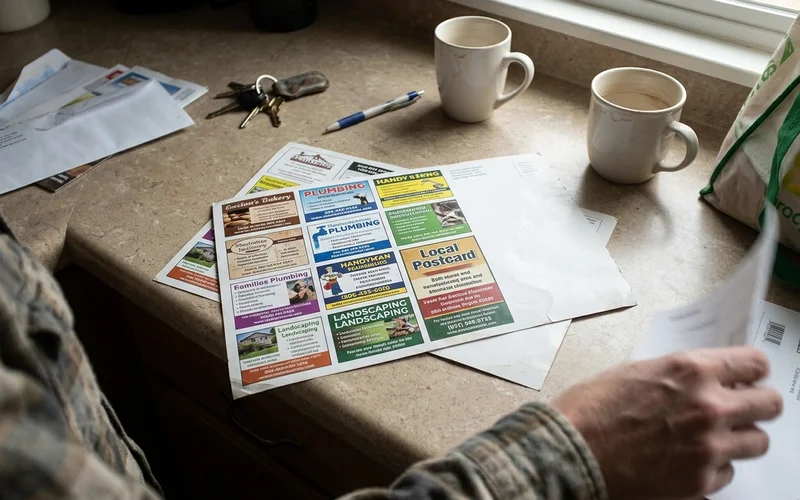
A co-op mailer is a single piece of mail shared by several businesses. Each business buys a spot on the card, and everyone splits the cost of design, printing and postage. Our Community Postcard is a co-op mailer built for local, owner-operated businesses in the Salt Lake Valley.
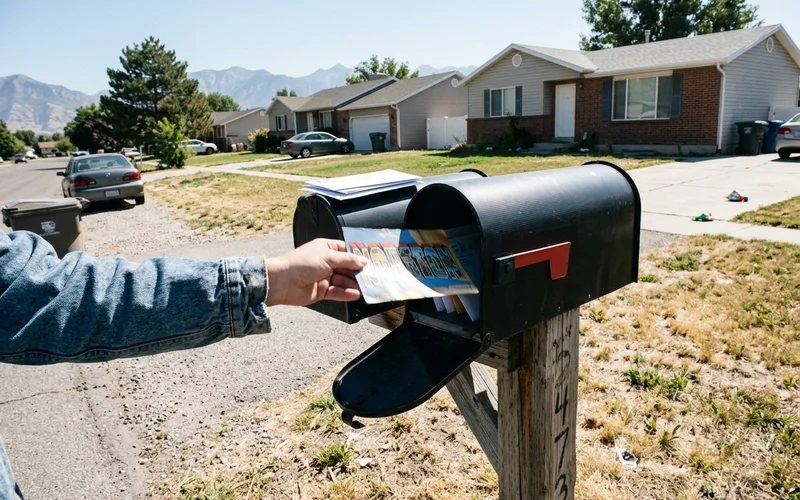
The idea is simple. Mailing a postcard of your own to thousands of homes costs real money: design, printing, postage and the work of preparing the mail. When up to 16 businesses share one card, each one pays a fraction of that cost and still lands in every mailbox on the route.
You may also hear co-op mailers called shared mailers, co-op direct mail or coupon mailers. They all work on the same basic model: many advertisers, one piece of mail.
The key difference with ours
Many shared mailers take every business that pays, so you can end up next to two competitors. On the Community Postcard there is only one business per category on each card.
How the Community Postcard works
Here’s what you get on our card:
- An oversized format. The card is 6.5 x 12 inches, full color and glossy. It’s bigger than a standard letter, so it doesn’t disappear in a stack of bills.
- Up to 16 businesses. Each spot is a clear block on the card. A double spot gives you twice the space, and the back panel anchor spot is the biggest ad on the card.
- One business per category. One roofer, one dentist, one landscaper. No competitor sits right next to your ad.
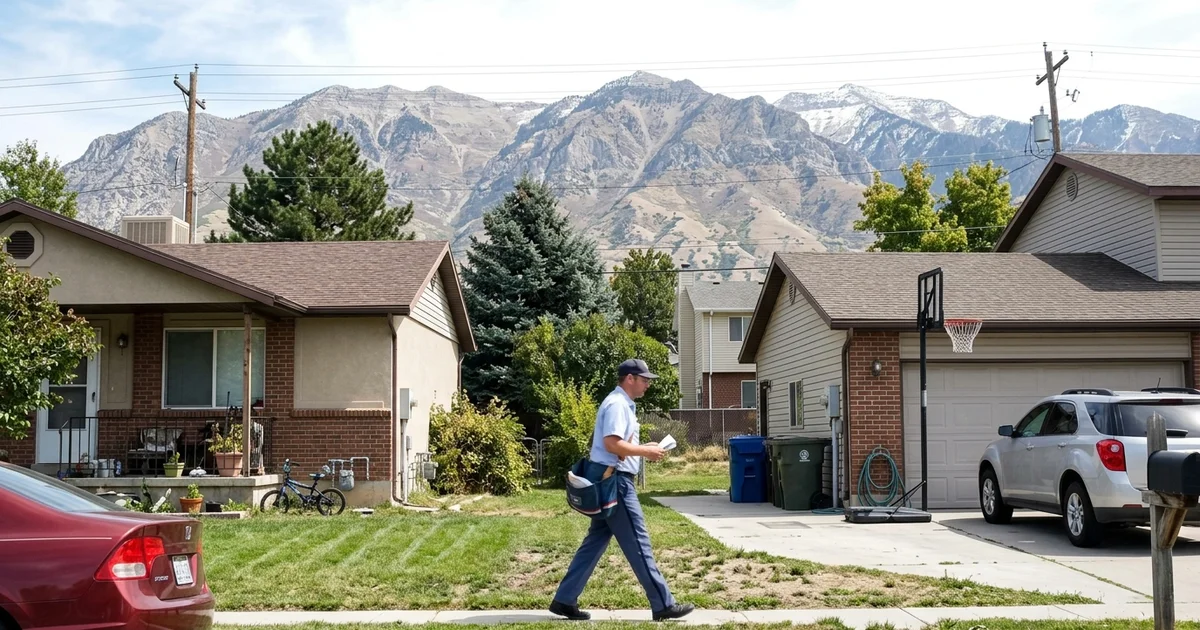
- 2,500 homes per edition. We mail by USPS Every Door Direct Mail (EDDM), which delivers to every address on the routes we choose. No mailing list is needed.
- Owner-occupied routes. We pick routes made up mostly of single-family, owner-occupied homes, the people who hire local businesses.
- Free design. You send your logo, your offer and your contact details. We design the ad and send a proof. Nothing prints until you approve it.
| Spot type | Price | What you get |
|---|---|---|
| Single spot | $249 | One ad block, one edition (2,500 homes) |
| Double spot | $449 | Twice the space, one edition |
| 3-run pack | $649 | The same spot in 3 mailings |
| Back panel / anchor | $1,200 | The large back panel, one edition |
Design, printing and mailing are included in every price. Payment is due at reservation, by card or ACH, and spots are first come, first served.
Why owners choose a shared card
Cost. Sharing the card is the most affordable way to put an oversized, glossy ad in thousands of mailboxes.
No work for you. We handle design, printing and mailing. You don’t need a designer, a print shop or a trip to the post office.
A real audience. Every home on the route gets the card, and we pick routes for owner-occupied homes. Read more in how postcard mail routes are chosen.
Trackable. Every ad can carry a QR code and an offer that only appears on the card, so you can see what it brings in.
Local. The card goes to neighborhoods in Draper, Sandy and Cottonwood Heights, and each city has its own edition with its own open categories.
Co-op mailer terms you’ll hear
If you’re new to shared mail, a few terms come up again and again. Here’s what they mean in plain words.
EDDM. Every Door Direct Mail, the USPS program that delivers to every address on a carrier route. It’s how the Community Postcard reaches 2,500 homes without a mailing list.
Carrier route. The set of addresses one mail carrier delivers to. Routes are the building blocks of every edition.
Saturation mail. Mail that goes to every address in an area, rather than to a list of names.
Edition. One mailing of the card to one set of routes. Draper, Sandy and Cottonwood Heights each have their own edition with their own open categories.
Category exclusivity. Only one business per category on the card. If you hold the landscaping spot, no other landscaper can buy one on that edition.
Proof. A preview of your ad before printing. You approve it, or ask for changes, before anything prints.
Anchor spot. The back panel of the card, and the biggest ad on it.
What a co-op mailer isn’t
A co-op mailer isn’t a coupon book stuffed with dozens of offers, and it isn’t junk mail sent to a random list. A good shared card is a short, clean set of local businesses chosen so they don’t compete with each other. Homeowners tend to treat it like a local directory: a few trusted names for the jobs they’ll need done sooner or later.
It also isn’t a replacement for everything else you do. The card works best as one piece of a simple plan. Someone sees your ad in the mailbox, then searches your name on Google, so a complete Google Business Profile and a working phone line matter too. If you miss calls while you’re on a job, a missed-call text-back keeps those leads from going cold.
How to get the most from your spot
- Lead with one offer. Make it specific and only available on the card.
- Make the phone number the easiest thing to find.
- Add a QR code to a page or offer you can measure.
- Answer fast when people call or text.
- Track it. Ask every new customer where they heard about you, and keep a simple log for each edition.
Is a co-op mailer right for you?
Shared postcards work best for businesses that serve homeowners and can make one clear offer: home-service trades, dentists, chiropractors, salons, gyms, real estate and insurance agents, restaurants and more. If you want full control over routes and the whole card to yourself, a solo EDDM mailing may fit better. Our guide co-op postcard vs solo EDDM postcard lays out the trade-offs.
If you’d like to see which categories are open on the next edition, contact us or call Tyler at (385) 360-1966. We’ll give you the next mail date and open categories.